
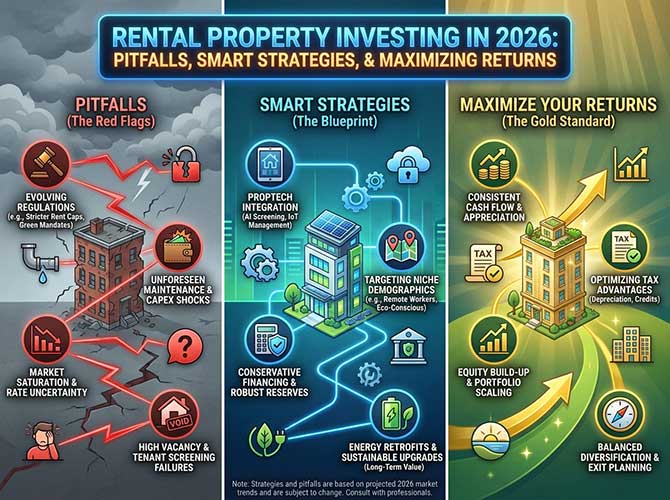
Rental property investing has long been one of the most reliable ways to build wealth, but in 2026 the landscape is more complex—and more opportunity-rich—than ever before.
R ising interest rates over the past few years, shifting tenant expectations, tighter regulations in some regions, and the continued integration of technology into real estate have changed the game. Investors who succeed today are not just buying property—they’re running data-driven, strategic businesses.
If you’re considering rental property investing (or already in the game), understanding the pitfalls and learning how to optimize your approach can mean the difference between steady passive income and costly mistakes.
Let’s break it down.
The Biggest Pitfalls to Avoid
1. Underestimating True Costs
One of the most common traps investors fall into is underestimating expenses. Mortgage payments are just the beginning. Maintenance, property taxes, insurance, vacancy periods, property management fees, and unexpected repairs all add up quickly.
In 2026, with higher material and labor costs, repairs can be significantly more expensive than they were even a few years ago. A roof replacement or HVAC issue can wipe out months—or even years—of profit if you’re not prepared.
Smart investors build in a healthy buffer. If your deal only works under “perfect conditions,” it’s probably not a good deal.

2. Overleveraging
Easy access to financing in previous years led many investors to stretch themselves too thin. While leverage can amplify returns, it also amplifies risk.
With interest rates remaining relatively elevated compared to the early 2020s, cash flow margins are tighter. Investors who rely too heavily on debt may find themselves in trouble if rents soften or expenses rise.
The key is balance. Conservative financing—combined with solid cash reserves—gives you staying power during market fluctuations.
3. Ignoring Local Market Dynamics
Real estate is hyper-local. A strategy that works in one city (or even one neighborhood) may fail in another.
In 2026, migration patterns, remote work trends, and urban development continue to reshape demand. Some suburban markets are booming, while certain urban cores are stabilizing after volatility.
Blindly following trends without understanding local supply, demand, rent growth, and vacancy rates is a major mistake. Always do deep market research before investing.
4. Poor Tenant Screening
A bad tenant can cost thousands in missed rent, damages, and legal fees. In a tighter economic environment, tenant quality matters more than ever. Skipping proper screening to fill a vacancy quickly is a short-term decision with long-term consequences. Background checks, credit history, employment verification, and references are essential. The goal isn’t just occupancy—it’s stable, reliable income.
5. Failing to Treat It Like a Business
Rental investing is not passive—at least not at the beginning. Many new investors underestimate the time, effort, and systems required. From bookkeeping to maintenance coordination to legal compliance, successful investors operate like professionals. Those who don’t often experience burnout or financial losses.

